What Most People Get Wrong About Preparing for Layoffs
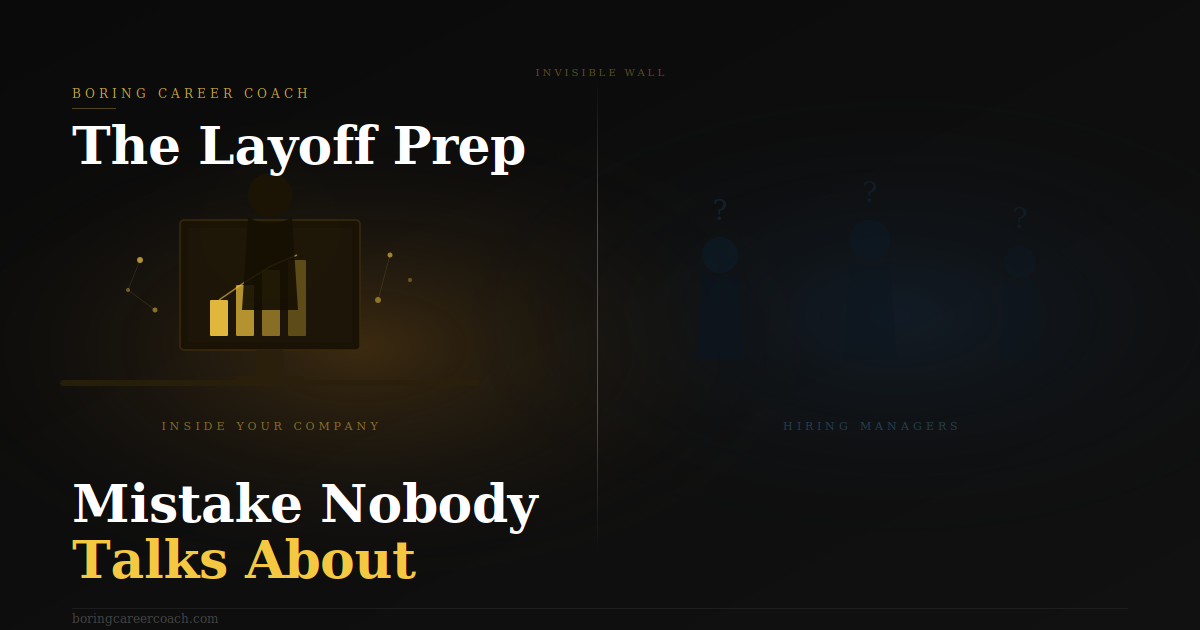
When layoffs feel close, most people do the same thing.
They work harder. They volunteer for more projects. They start learning AI tools to show they are keeping up. They try to become the person who is too valuable to cut.
It feels like the right move. It is not.
The problem is simple: everything you do inside your company is invisible to the people who will decide whether to hire you next.
And here is the part that catches most people off guard. Your job can be at risk even when your company is doing well.
Budget decisions, headcount targets, and reorgs do not care how good your last review was.
You Are Preparing for the Wrong Audience
Your manager sees your effort. Your skip-level might notice. But the recruiter at your next company? The hiring manager reviewing 200 applications? They see none of it.
They see your LinkedIn profile.
They see whether someone in their network knows your name. They see the last time you updated your experience section, and whether it was three years ago.
That is the audience that matters when the layoff hits. And most people are not preparing for them at all.
The AI Skills Gap Nobody Talks About
Right now, a lot of people in tech are learning AI tools on the job, becoming the go-to person for AI projects, hoping it buys them a seat at the table when the cuts come.
What nobody tells them is those skills only count if they show up somewhere a hiring manager can find them before you need a job.
If your LinkedIn still says “Product Manager” with a three-line summary and no recent activity, your internal AI pivot is a resume gap waiting to happen. The skills are real.
The proof is invisible.
This is the same problem I covered in bad positioning killing your career before AI does. It is not the skills that fail you, it is how you present them to the outside world.
Update your profile now.
Add the tools you are using. Write about what you are learning. Connect it to outcomes. Do not wait until you are job searching to build the story.
What Actually Protects You
Internal performance does not protect your job.
What protects your career, not just your current job, is how visible and well-connected you are outside your company right now.
Your LinkedIn profile needs to tell a story today.
Not when you get laid off. Not when you update your resume.
Today.
Recruiters and hiring managers look you up while you still have a job. That is when they form their first impression.
If you want a system for doing this without it feeling awkward, the LinkedIn system for people who hate LinkedIn is worth reading before anything else.
Your network needs to be warm before you need it.
A cold message to someone you have not spoken to in three years asking for a referral is a long shot.
A check-in with someone you have stayed in touch with is a conversation. The difference is the work you did before the layoff.
Building career capital is a more useful frame here than networking. It reframes staying connected as an investment rather than a transaction.
You need to know your number.
What salary range are you targeting? What roles match your experience? What companies are actively hiring in your space?
If you do not have answers to these questions today, you are starting from zero on the day you need to move fast.
The Timing Problem
Most people wait until they are out of work to start their job search.
That puts them in the worst possible position: emotionally stressed, financially pressured, and invisible to the market.
Recruiters treat candidates differently when they are currently employed. The calls come faster. The offers are better. The negotiating position is stronger.
The good news is that layoffs usually send signals weeks or months before they happen. There are ways to spot a layoff 3 to 6 months before it hits, and that window is when your prep work matters most.
Starting your search, or at least your preparation, while you still have a job is not disloyalty.
It is survival.
And it gives you options instead of desperation.
What to Do This Week
You do not need to overhaul everything overnight.
Start here:
-
Update your LinkedIn headline and summary to reflect what you do and what you are learning.
Add any AI tools or projects from the last 12 months. If your profile has not moved in two years, that is where the work starts.
-
Reach out to two or three people in your network
Keep it simple. Ask how they are doing. No agenda needed yet.
-
Look at three to five job postings in your target role
See what language they are using, what skills they are asking for, and whether your current profile reflects any of it. Then run your resume through this free resume–job match checker to see exactly where the gaps are.
If you want a more complete framework for this, the 10-day exit plan walks through the full prep sequence step by step. And if a layoff has already happened, silence is the real problem.
What you do in the first few days shapes how fast you recover.
The people who land jobs fastest after a layoff are the ones who made sure the right people knew who they were before it happened.
Start there.
Get the Next Script First
One email when a new post goes live. Scripts, templates, and the exact words to send. Free, and you can unsubscribe in one click.